The Gender Gap
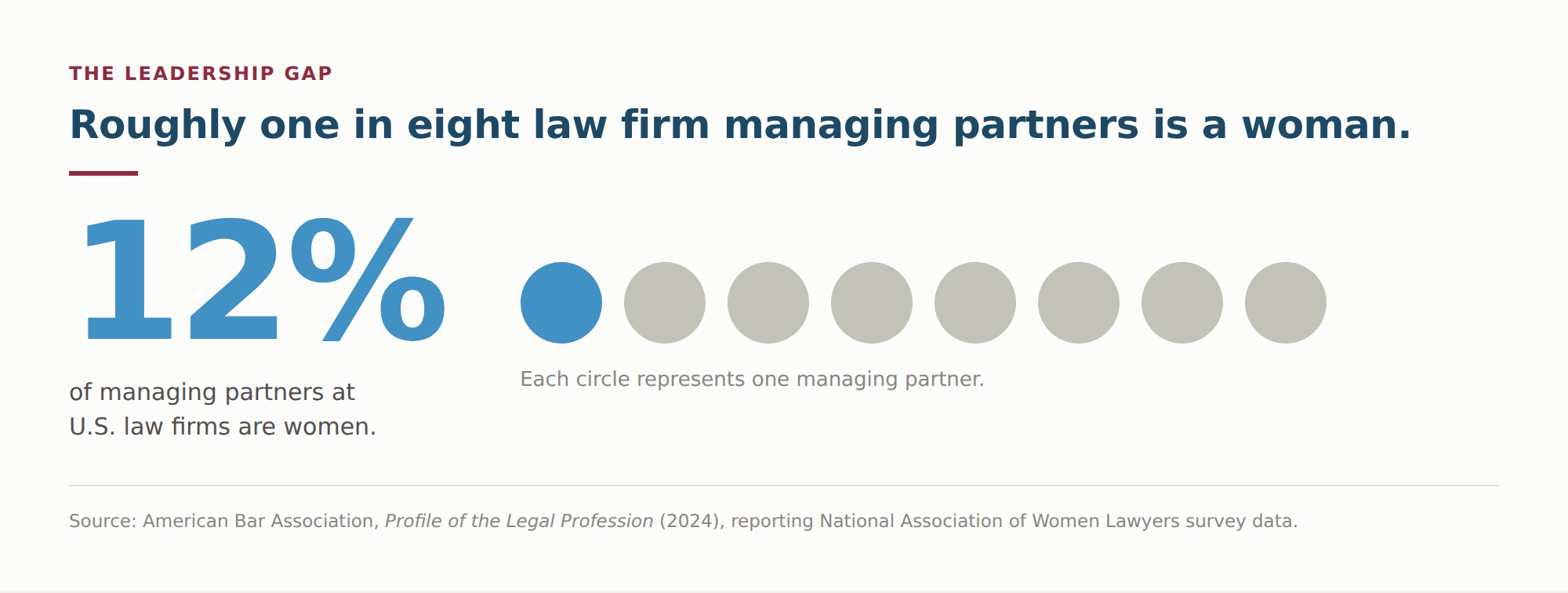
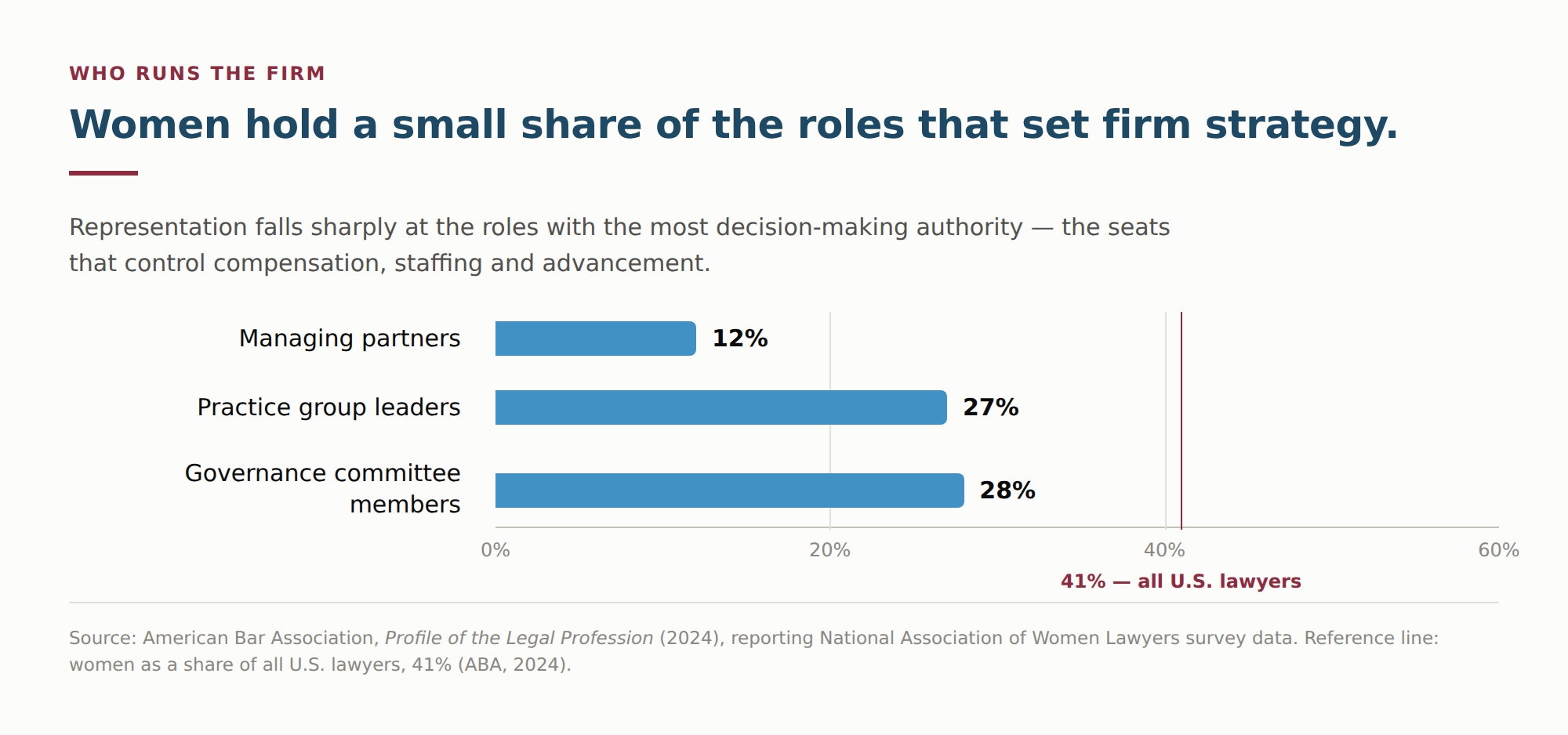
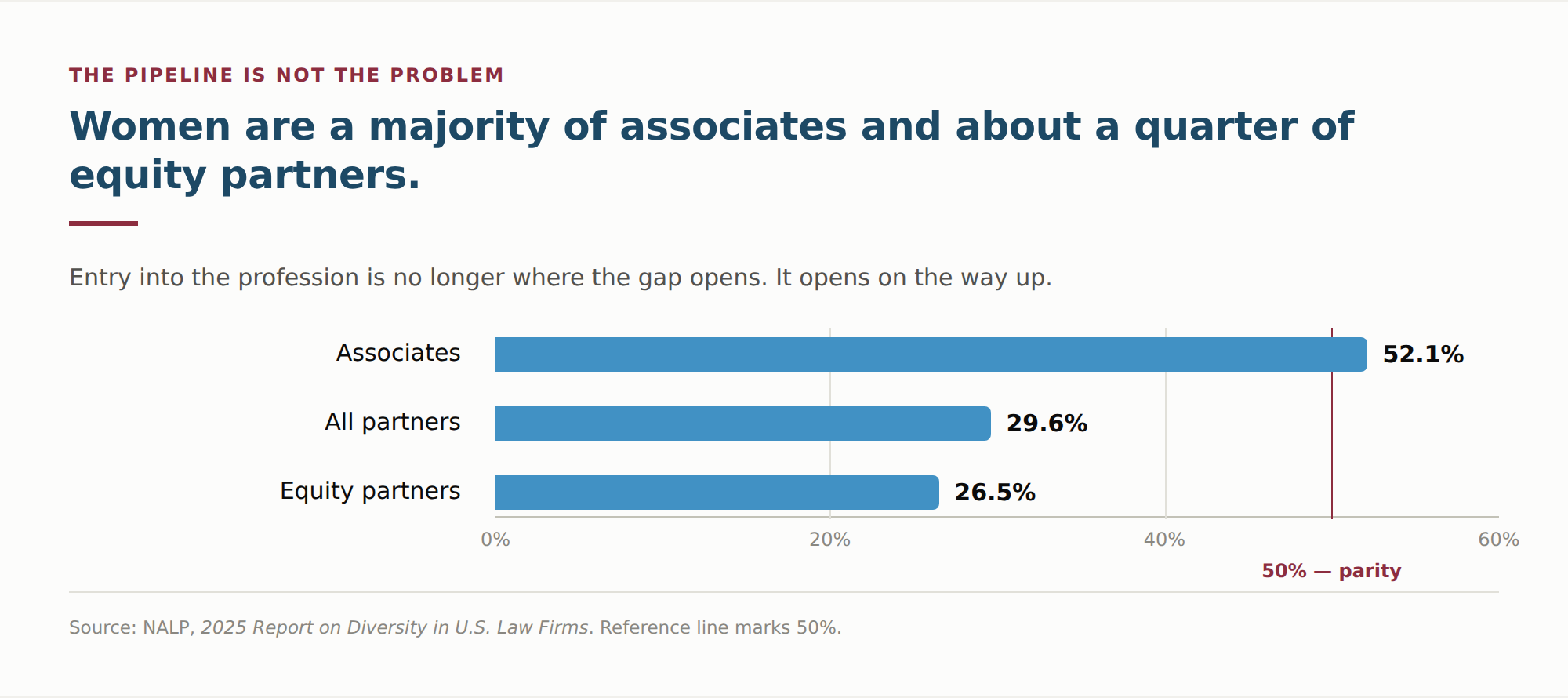
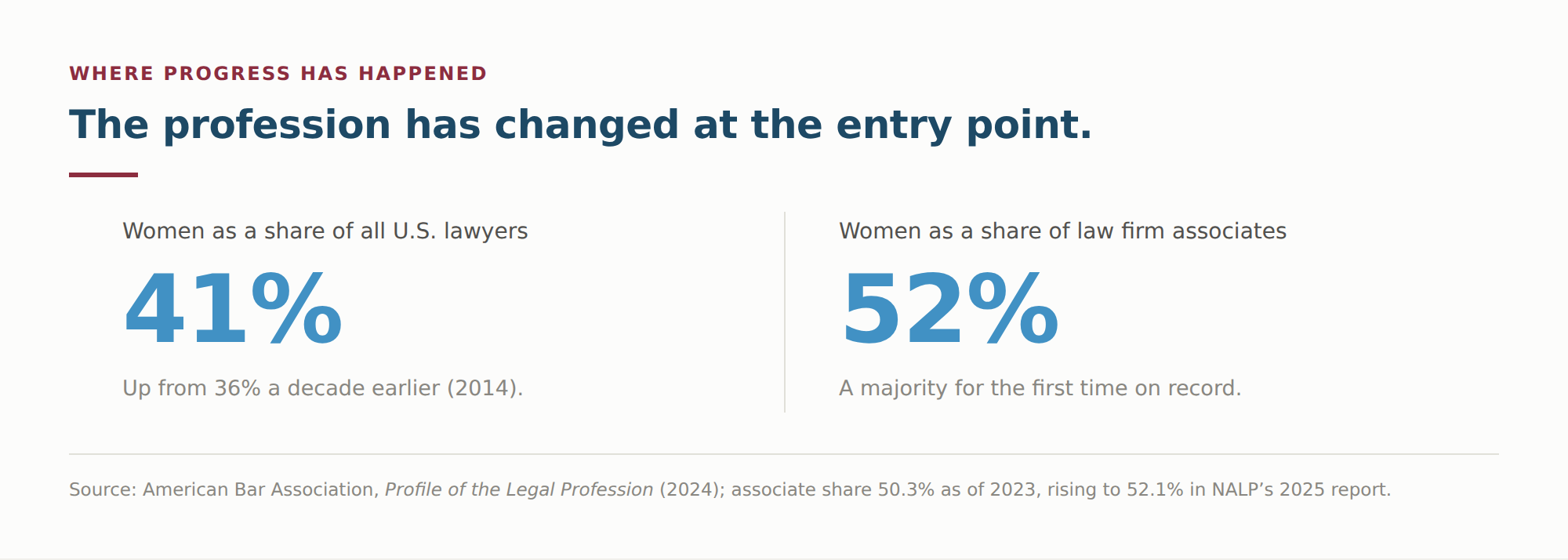
When the Bexar County Women's Bar Foundation created LEAD, the problem was easy to name: talented women were leaving the practice of law, and many who stayed advanced more slowly than the colleagues beside them. A decade later, part of that picture has changed. Women now hold the majority of associate positions at American law firms and make up a growing share of the profession as a whole. What has not changed is what happens next. Women hold roughly a quarter of equity partnerships and about one in eight managing partner seats — the roles that determine who gets hired, who gets the work that builds a career, and how people are paid. The gap is no longer at the entry to the profession. It is at every step above it. That is the gap LEAD was built to close.
The figures below come from the organizations that have tracked this question the longest: the American Bar Association's annual Profile of the Legal Profession, the National Association of Women Lawyers' surveys on retention and promotion in law firms, and NALP's annual report on diversity in U.S. law firms. We rely on them because change in this profession is slow enough to be invisible year to year — often a fraction of a percentage point — and because the experience of any one attorney, however true, can be set aside as an exception. Taken together, these numbers are harder to dismiss. Read them for the pattern rather than for any single figure: representation is strongest where careers begin and thinnest where decisions get made. We update this page as each new report is released.